Hear from Leander

Get to know Leander’s approach to teams, strategy and making progress.

What’s getting in
your way right now?

Choose what feels closest to your situation.

Choose the situation that feels closest to yours.

Too much depends on meClose

You know your team could be achieving more.

Why aren’t they?

You have good people. Good systems. And they probably have a pretty good idea of what needs to be done.

Yet too much still lands on your desk at the end of the day.

What stops moving when you stop pushing?

Sound familiar?

Important initiatives start strongly, then lose momentum.

Your people are capable, but too much still comes back to you.

You haven’t found the time to invest sufficiently in their skills - or create proven processes they can follow without you.

The obvious problem is often not the real problem.

Why?

When something important isn’t happening, our instinct is usually to fix what we can see.

More micromanaging. More carrot and stick. More performance appraisal discussions. Another hire. More meetings.

Sometimes that’s exactly what’s needed. Sometimes they’re solutions to the wrong problem.

Because the right solution to the wrong problem is still the wrong solution.

Sometimes you’re too close to see what’s really getting in your team’s way.

Why me?

I’m Leander.

I spent more than two decades inside professional-services firms, including 15 years as a partner.

Today I work alongside professional-services leaders to understand what’s preventing an important change from happening - and help them do something about it.

I bring enough distance to see what may be difficult to see from inside the business - and stay close enough to help turn that insight into change.


Leander OppermanA compass for the way ahead
Leander Opperman | Founder, UNLOK

Diagnose. Focus. Execute.

Diagnose.

Understand what’s really getting in the way.

Focus.

Identify the priority that matters most.

Execute.

Turn the important change into action.

A pair of trekking poles with orange grips

What matters most right now?

Find your priority

When everything feels important, very little gets the focus it deserves.

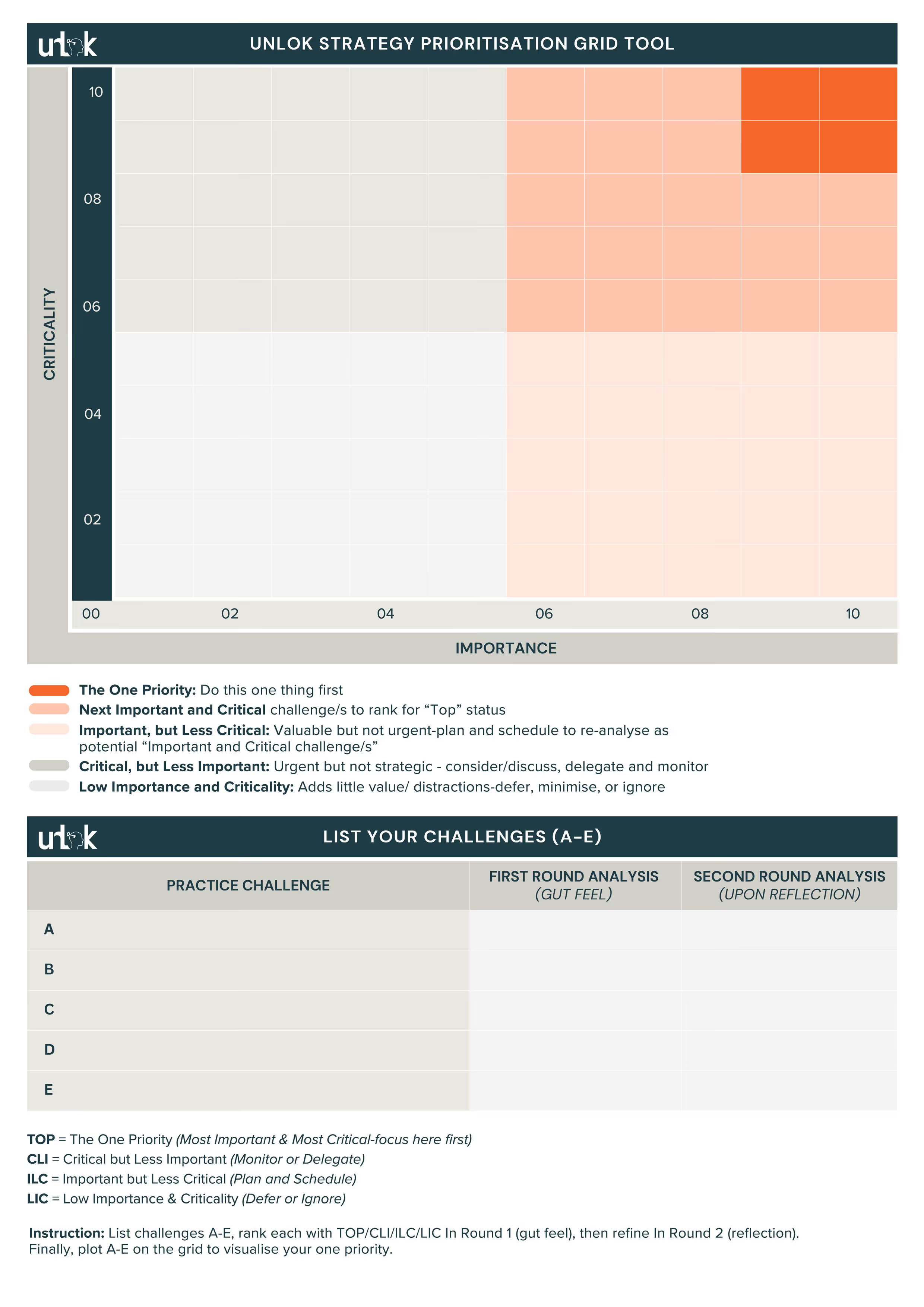
The UNLOK Strategy Prioritisation Tool helps you identify the one priority that deserves your attention now.

Identify your priority

Important work keeps moving - without depending on you.

What changes?

Priorities are clear.

People know what they own.

Your decisions turn into your team’s actions.

People take greater responsibility without waiting to be chased.

And you have more space to lead, think and build what comes next.

Orange-strapped crampons on snow, ready to provide traction

Or nothing changes.

What does that cost?

Everything keeps ending up back on your desk.

Capable people remain underused.

And too much continues to depend on you.

Something important needs to change?

Book a discovery call
My practice is stallingClose

My practice is stalling

Why is that?

You are good at what you do.

You have experience, expertise and a track record you can point to.

Yet your practice isn’t developing the way you know it could.

The question isn’t simply how to find more work. It’s what’s really getting in the way of building the practice you want.

Being good at the work doesn’t guarantee more of it.

Sound familiar?

The flow of new matters has become uneven.

Practice development becomes more urgent when the pipeline starts to thin.

You know you should be more deliberate about developing your practice. But where do you start?

Maybe you don’t have a practice development problem.

Then what is it?

When a practice isn’t growing, the obvious response is to do more broadcasting.

More conferences. More client lunches. More LinkedIn posts celebrating your accolades. More articles addressed to a faceless audience. More activity in more directions - hoping something hits the mark.

Sometimes that just makes you busier.

The better question is:

Where can I create the greatest leverage?

You don’t need someone to teach you how to be a professional.

Why me?

I’m Leander.

I spent more than two decades inside professional-services firms, including 15 years as a partner.

I understand the tension between doing excellent client work today and deliberately building the practice you want tomorrow.

My role is to help you step outside the day-to-day long enough to understand what’s really getting in the way, identify where your greatest leverage lies, and turn that focus into deliberate action.

You bring the professional expertise. I help you think more clearly about how to build the practice around it.

Leander OppermanA compass for the way ahead
Leander Opperman | Founder, UNLOK

Diagnose. Focus. Execute.

Diagnose.

Understand what’s really getting in the way of developing your practice.

Focus.

Identify where you can create the greatest leverage.

Execute.

Turn that focus into deliberate, consistent action.

An ice axe with an orange grip anchored into a snowy rock face

What matters most right now?

Find your priority

When everything feels important, very little gets the focus it deserves.

The UNLOK Strategy Prioritisation Tool helps you identify the one priority that deserves your attention now.

Identify your priority

You stop waiting for new work to arrive. You start building your practice.

What changes?

You become clearer about the clients you want to serve, understanding more deeply what they actually value.

You spend less time on aimless practice-development activity and become intentional about the relationships and opportunities that matter.

Practice development stops being something you turn to only when the pipeline starts to dry up.

You build the habits that keep your practice moving.

Because correctly investing your non-billable time today helps build tomorrow’s fees.

Orange-strapped crampons on snow, ready to provide traction

Or you wait for the next matter to arrive. And hope it does.

What does that cost?

Your practice remains more reactive than intentional.

Relationships aren’t developed deliberately.

And every quiet period brings back the same question:

"Where is the next instruction coming from?"

“Hope” is not a strategy.

Something needs to change?

Book a discovery call
I know what matters, but I’m not moving itClose

You know what you should be working on. The important stuff. Not (only) the urgent stuff. So why aren’t you doing it?

What gets in the way?

You don’t lack ambition.

You probably don’t lack ideas either.

You know which things would make the biggest difference if you gave them consistent attention.

Yet the urgent takes over, your focus gets fragmented, and another week disappears.

You feel busy all day. But the things that matter still aren’t moving.

Sound familiar?

Your diary fills up faster than you can protect it.

You start with priorities and end up responding to everyone else’s.

Important work gets pushed to tomorrow.

Then tomorrow becomes next week.

Maybe you don’t have a time management problem. Perhaps you have a focus problem.

A focus problem?

When we’re not getting enough done, the obvious culprit is often time management.

A better diary. A new productivity system. A longer to-do list. Another app. More discipline.

Sometimes those things help.

But you can’t manage time. You can only decide what deserves your attention - and protect it.

The better question is:

What deserves my focused attention?

And what keeps getting in the way?

You don’t need someone to chase you. You need someone in your corner who wants to see you win.

How does that help?

I’m Leander.

I’ve spent much of my career working with ambitious professionals who know what they want to achieve - but find that the pressure of everyday work keeps getting in the way.

My role isn’t to manage your diary or tell you what to do.

It’s to help you get clear about what matters, create the disciplines that protect it, and provide the accountability that keeps your intentions from quietly becoming another thing you’ll get to later.

You remain responsible for the work. I help you keep it important.

Leander OppermanA compass for the way ahead
Leander Opperman | Founder, UNLOK
Two climbing partners helping one another ascend a mountain

Diagnose. Focus. Execute.

Diagnose.

Understand what’s really getting in the way.

Focus.

Identify the priority that matters most.

Execute.

Turn that priority into consistent action.

A crampon gripping the ice beneath a mountaineering boot

What matters most right now?

Find your priority

When everything feels important, very little gets the focus it deserves.

The UNLOK Strategy Prioritisation Tool helps you identify the one priority that deserves your attention now.

Identify your priority

Stop ending your week wondering where it went. Start ending it saying: “The important things moved.”

What changes?

You become clearer about what deserves your attention.

You protect time for work that matters rather than hoping you’ll find time for it.

You make fewer commitments - and keep more of them.

The urgent still happens. It just stops automatically winning.

And accountability stops being someone checking whether you’ve done your homework.

It becomes a discipline for turning intention into progress.

A coiled climbing rope, ready to support the ascent

Another week of zero progress on what mattered.

What does that cost?

What mattered last week hasn’t disappeared.

It has simply followed you into this week.

And this week’s important work is already competing for the same attention.

The longer it waits, the more you’re carrying and the less bandwidth you have.

Something needs to change?

Book a discovery call
← All insightsInsight

A practical framework for Strategy Execution that actually works

Most law firms don’t have a strategy problem. They have a follow-through problem.

The goals are there. The plan is there. The commitment, even, is often there. But somehow, momentum stalls. Partners carry too much of the weight. Associates keep their heads down, unsure where to focus beyond the billable. And critical, high-value priorities - like client engagement, innovation, or business development - fall by the wayside.

We’ve seen this pattern play out across firms of every size. That’s why I suggest using the PROPEL acronym - a simple, practical framework designed to help you reconnect your people with your strategy, and turn performance drift into purposeful execution.

Here’s how PROPEL works, and how it aligns with the way we work at UNLOK. DOWNLOAD THE FRAMEWORK PDF HERE.

P – Problem

You already have a strategy. But execution keeps slipping.

We often hear firms say things like, “We set clear goals, but we don’t follow through,” or “It feels like the same three people are carrying the whole firm.” These are not signs of a lack of ambition—they’re symptoms of a deeper issue: strategic priorities aren’t reaching the rest of the team in a meaningful, actionable way.

R – Root Cause

People default to the urgent because the important feels unclear.

Your strategic goals - whether they’re about growing a client segment, building new IP capability, or improving team culture - aren’t clearly connected to individual strengths or daily actions. Without this connection, most people will gravitate back to what’s familiar, urgent, or easy to measure.

O – Opportunity

Strategy becomes real when it’s personal.

Your firm can unlock untapped performance by helping every person on your team understand how their unique talents can support the firm’s goals. When people see where they fit and how they contribute, they become far more focused, engaged, and energised. Even better? When their progress is tracked, it builds momentum - and accountability.

P – Proposition

UNLOK makes that connection real.

We work with your team to identify each person’s natural strengths - what they’re great at, and what energises them - and align those strengths to clear, strategic actions. We then help you establish a weekly rhythm of accountability that keeps those actions moving. Not more admin. Not more meetings. Just structured visibility and meaningful traction.

E – Evidence

This works. Fast.

In just nine weeks, one UNLOK client (a mid-sized law firm) saw productivity rise from 71% to 89% - unlocking a 3% increase in revenue - without restructuring, hiring, or adding pressure. The shift came simply from aligning talent with action, and tracking it with consistency.

L – Logic

You already have the legal talent. The structure is what’s missing.

Strategy execution doesn’t need to be heroic. It needs to be shared. When each level of the firm understands how to contribute - and is given a simple structure to stay accountable - strategy becomes a shared, measurable reality.

← All insightsInsight

Creating a Culture of Continuous Improvement

My Story So Far

It’s 2019, and I’m at a crossroads in my career: I’m reflecting on my work as a lawyer specializing in corporate debt recovery. While I’m regarded as an expert, there’s one nagging thought: Is this what the next 22 years will look like?

Fast forward to January 2021. I’ve just completed an international MBA and realized how much I enjoy learning and leveraging that for reinvention. This is the catalyst I need for a new path.

By April 2024, I’ve decided to tackle strategy execution, the “great unaddressed issue” in most organizations, as Stephen Covey describes it. I set a bold goal: Can I turn strategy consulting into a product?

Enter Account-a-Trac, and my partnership with Reghardt Pretorius, a mechatronic engineer from Discovery. A year later, we have a working prototype of software that leverages human connections, AI, and low-tech tracking of my clients’ strategic actions taken each week. Built in under six months, it’s already generating revenue.

What’s My Point, You May Ask?

The key factor has been mindset: It’s said that mindset is what separates the best from the rest. Although our product is far from perfect, we are gaining traction and believe we are solving a valuable problem that can help our clients gain momentum in implementing their business development strategies.

We regularly meet to discuss new ideas and just last week sought feedback from an industry professional on a potential follow-up market among coaches. His feedback was that he’s pleased to see how we take the time to understand the problem we’re addressing before diving into building a solution. This is a common pitfall for many entrepreneurs - spending all their time creating products without fully understanding the problem.

We’ve been experimenting with different aspects of the software, using opportunities for development from discussions with sales, user experience experts, and a marketing strategist. And, we celebrate the small wins by sharing a good coffee and giving each other feedback on our progress toward solving a significant challenge.

Let’s Apply This to Your Practice

Here are the takeaways from my journey of continuous improvement to help you on your own journey of reinventing your practice:

1. Promote a Growth Mindset

Encourage your team to view challenges as opportunities to grow. A growth mindset allows individuals to see setbacks as learning experiences rather than failures. This will foster resilience and enable continuous improvement.

For example, in the evolving legal market, the rise of technology and alternative legal service providers has disrupted traditional models. Law firms that have resisted adopting new technologies or ways of working have faced client attrition and difficulty attracting top talent. Those that embraced change and a growth mindset - viewing new tech as an opportunity to expand service offerings - have not only survived but thrived.

To dive deeper into the power of a growth mindset, I recommend Mindset: The New Psychology of Success by Carol Dweck. This book is a must-read, as it explores how adopting a growth mindset can transform both personal and professional development, empowering individuals to reach their full potential.

2. Regularly Seek Feedback

Feedback is crucial for growth. It keeps your team aligned with goals and helps identify areas for improvement. Constructive feedback ensures continuous progress, refining strategies over time.

In law, where client expectations shift constantly, regularly seeking feedback allows you to identify potential service gaps before they become problems. A firm that doesn’t actively seek feedback may lose clients to competitors who are more attuned to their needs.

For a comprehensive understanding of how feedback can drive improvement, I suggest reading Thanks for the Feedback: The Science and Art of Receiving Feedback Well by Douglas Stone and Sheila Heen. This book will equip you with the tools to not only give but also receive feedback effectively - critical for personal and organizational growth.

3. Encourage Experimentation

Encourage your team to try new ideas and innovate. Experimentation opens the door to breakthroughs and provides valuable learning opportunities that can drive improvement.

In the legal industry, experimentation could mean offering new billing models, using AI to assist with document review, or adopting virtual consultations to expand your reach. Those who embrace experimentation can adjust quickly to client needs and market changes. On the other hand, firms that resist change or stick to traditional methods face the risk of becoming irrelevant in a tech-driven world.

If you want to explore how experimentation can lead to business breakthroughs, The Lean Startup by Eric Ries is a must-read. This book highlights the importance of testing ideas and iterating on them to ensure sustainable growth.

4. Provide Opportunities for Development

Help your team grow through training, mentoring, and applying their skills in real-world scenarios. Continuous learning ensures your team adapts to evolving challenges.

Resistance to development is one of the biggest barriers to improvement. Law firms that fail to invest in their people - through training on new technologies, advanced legal methodologies, or leadership development - will fall behind those firms that prioritize employee development and growth. In a rapidly changing legal market, firms that foster growth through continuous development will gain a competitive edge.

To dive deeper into how development opportunities can set your team up for success, The First 90 Days: Critical Success Strategies for New Leaders at All Levels by Michael D. Watkins is a fantastic read. It offers strategies for accelerating learning and growth, especially when taking on new challenges or leadership roles within a firm.

5. Celebrate Small Wins

Acknowledge and celebrate small wins. Recognizing incremental progress keeps your team motivated and reinforces the idea that consistency leads to larger success over time.

In the fast-paced legal market, where big wins can be few and far between, celebrating small wins - like a client referral, a successful case outcome, or the adoption of a new technology - helps build morale and keeps the momentum going. Firms that recognize these victories stay motivated and focused on long-term goals.

For a great read on the importance of small wins, The Power of Small: Why Little Things Make All the Difference by Linda Kaplan Thaler and Robin Koval is highly recommended. This book emphasizes how even the smallest progress can create significant results over time and keep the momentum going.

Is Your Firm Focused on Continuous Improvement?

Creating a culture of improvement takes time, but with dedication, it leads to long-term success. By promoting a growth mindset, regularly seeking feedback, encouraging experimentation, providing opportunities for development, and celebrating small wins, your firm can build an environment where continuous improvement drives success.

Addressing Common Objections:

I know what you might be thinking - But what about the costs of implementing these strategies? Or maybe, How can we overcome the resistance to change, especially when our team is set in their ways?

Let’s start with cost. Yes, change requires investment, whether it’s time, money, or effort. However, the cost of not implementing continuous improvement strategies is often far higher. Firms that resist innovation risk falling behind in a competitive, technology-driven market, losing both clients and talent. The return on investment (ROI) from adopting these principles - whether in the form of improved client satisfaction, higher retention rates, or more efficient operations - is substantial.

As for resistance to change, this is common in any industry. People are naturally skeptical about new methods, especially when they’ve been operating in a certain way for years. Overcoming this requires strong leadership, clear communication, and a commitment to ongoing support and development. Show your team the why behind these changes and how they align with the firm’s long-term success. Start small, celebrate progress, and soon you’ll see momentum shift in your favor.

Finally, skepticism about the product’s value is natural, especially in the early stages of adoption. However, our product has already helped multiple firms streamline their strategy execution, and we continue to improve it based on feedback from users. Like any tool, its value increases over time as you integrate it more deeply into your processes.

Start small, and soon the results will speak for themselves.

← All insightsInsight

Cultivating a Growth Mindset and Organisational Capabilities

In the wise words of H. Nelson Jackson, "I do not believe that you can do today's job with yesterday's methods and be in business tomorrow." This sentiment underscores the imperative for continuous growth and development, especially within your organisational capabilities.

So, what constitutes organisational capabilities? Here are a few key examples:

  • Organisational Culture
  • Leadership Performance
  • Strategic Unity
  • Innovation
  • Agility
  • Talent
  • Customer
  • Connectivity

These capabilities are the intangible strategic assets your firm relies on to execute its business strategy and satisfy its clients. They are the engines that propel your firm towards achieving its objectives and maximising performance.

In his insightful book, "Leading in Tough Times," John Maxwell underscores the importance of making growth a goal. He states, "People who make growth a goal – instead of a title, position, salary or other external target – always have a future."

As you consider your firm's objectives for 2023, is enhancing your organisational capabilities among them? Reflect on your firm's growth in capabilities over the past three years and the extent to which you, as the founder, and your team have committed to developing your skills during this period.

Without a growth mindset, your firm is unlikely to make meaningful strides in any of these capabilities. Therefore, inspire your team members to invest in themselves and foster a growth mindset. Encourage them to see the value in improving their skills. This investment will undoubtedly be one of the best you can make for your professional services firm.

As your team members enhance their capabilities, they become catalysts for growth within their departments, divisions, and ultimately, your entire firm. After all, if you're not growing, you're not going anywhere.

Are you ready to "unlok" your team's growth potential? Get in touch with us at UNLOK Consulting. We're here to guide and support you on this transformative journey of growth and success.

← All insightsInsight

Ditching the Comfort Blanky: Why Adaptability is the New Strategic Superpower

We all have one.

A comfort blanky.

In business, it often takes the form of a go-to tool, a well-worn process, or a strategic approach we’ve relied on for years. We convince ourselves that if we just know what’s coming—what trends, what tools, what technologies—we’ll be ready.

But that assumption is precisely the problem.

Beyond the AI Obsession

In 'Expansive', John Sanei and Erik Kruger describe how organisations become trapped in the search for “what”—as in, *what’s trending*, *what’s next*, *what AI tools to use*—while avoiding the harder conversation about *how*.

As they put it:

“Your obsession with what… is really a panic about how.”

And here’s the kicker from Kruger himself:

“If action followed knowledge and information, we’d all have six packs, right?”

The Illusion of Insight

Professional service firms—especially law firms—are steeped in intelligence and insight. We attend the workshops, circulate the slide decks, nod in agreement during strategy sessions.

But how often does insight turn into execution?

The problem isn’t intelligence. It’s inertia. Osmosis doesn’t happen in boardrooms. And “great understanding” doesn’t automatically lead to meaningful progress.

Enter AQ: The Adaptability Quotient

IQ and EQ are no longer enough.

The real superpower now is AQ—your Adaptability Quotient. It’s not about having all the answers. It’s about being agile enough to keep moving when the answers aren’t clear.

AQ is your firm’s ability to:

  • Unlearn what no longer serves
  • Engage with ambiguity
  • Pivot with confidence when the context changes

And that only happens when you drop the comfort blanky of “we’ve always done it this way.”

Lessons from the Rock Face

During my own mountaineering training, I learned that it wasn’t strength that got me through the toughest climbs—it was flexibility.

That’s why I took up yoga.

Not for the aesthetic, but because it trained me to stay grounded and responsive when conditions shifted unexpectedly.

That same principle applies to business strategy.

Where to From Here?

If you want your firm to stay relevant and resilient in the face of constant change, it’s time to shift focus:

  • Stop obsessing over what’s next
  • Start mastering how you adapt
  • And start flexing your AQ daily

Ask yourself:

  • What comfort blanky do we need to let go of?
  • What patterns are we repeating out of fear, not strategy?
  • And how do we lead differently, starting now?

In a world that rewards adaptability, AQ isn’t a soft skill—it’s your strategic edge.

← All insightsInsight

Doing a Few Things Well is Strategic

Three professional productivity hacks for the committed and disciplined.

"...if you would have peace of mind, busy yourself with little...do what you must (not everything you can) ... For this brings not only the peace of mind of doing few things but the greater peace of doing them well." - Marcus Aurelius [1]

A Myth Demystified

Multitasking: It's the modern professional's badge of honour, right? But is it really the path to productivity, or is it a myth that spreads our focus thin?[2]

Let's dive into three proven disciplines that align focus with productivity and move away from the "busyness" that can leave us anxious and overwhelmed. How productive are you? [3] Productivity improvement is an aspect that a professional firm should be working on as part of its strategy. [4]

Ready? Let's begin:

1. The Law of Three: Prioritising with Precision

  • High Return on Time Investments (HRoTI): Determine the three most vital tasks for your day, and tackle them first thing. These aren't mundane chores; these are your pivotal success-makers.
  • Low Return on Time Investments (LRoTI): Emails, organising, casual chats – they can wait. These less urgent tasks are for later.
  • Timing is Everything: Harness the fresh energy of the morning, and keep your focus laser-sharp.

2. Time-Blocking: A Symphony of Focus

  • Inspired by Peter Drucker's insights and further elaborated by Cal Newport, time-blocking is about orchestrating your day into productive intervals.[5]
  • "Manage your time, not your tasks," says Newport, and he's onto something. Plan every moment, and watch your productivity soar.
  • Need inspiration? Check out this video and Cal's Time-Block Planner:

3. The Five-Minute Rule: Tackling Procrastination

  • Dreading an important task? Commit just five minutes. Set a timer if you must.
  • Those five minutes may unlock your momentum. As an Irish proverb wisely reminds us: "You will never plough a field if you only turn it over in your mind."

From 'Busyness' to Mastery

These aren't my inventions; they're borrowed wisdom applied with zest. We've all been wheel-spinning procrastinators at some point. But the likes of Cal Newport, Elon Musk, and Bill Gates show us that mastering time instead of tasks is where true productivity lies.

Think "it won't work for me" or "my days are unpredictable?" The great minds above likely have less predictable days than you and me, yet they thrive.

Commit to these disciplines, and you'll find that doing a few things well is far more rewarding than mediocrity in many.

Your Next Move?

Stop mulling over the idea. Embrace these principles, and elevate your focus. The time to begin is now.

[1]From The Daily Stoic by Ryan Holiday and Steven Hanselmann

[2]In his book, The Attributes, Rich Diviney refers to research at the University of Utah. Researchers found that 98% of people participating in a study became worse at each extra task they undertook. The remaining 2%, who didn't get worse or even improved, weren't multitasking, they were task-switching.

[3]You can measure this by dividing the tasks that you completed over the tasks you scheduled over the past week. The aim is to arrive at a consistent productivity ratio of 70%-80%.

[4]See: Maister, D: Managing the Professional Service Firm

[5]See Drucker, P: The Effective Executive as discussed by Cal Newport in The Time-Block Planner

← All insightsInsight

Finding Your Firm's True North: Strategy Simplified

The world of strategy can feel like navigating a maze, especially in a post-pandemic era where yesterday's blueprints are as useful as a compass without a needle.

From Chaos to Clarity

It's time to put aside any preconceived notions of strategy as something convoluted. Harvard Business School's David Maister sums it up elegantly:

"...development of a set of actions that will make the firm's services more valuable to clients than competing firms." [1]

Sounds refreshing, doesn't it?

The Leadership Dilemma

As partners or directors, our plates are overflowing with responsibilities. Crafting an effective strategy may feel like squeezing another task into an already tight schedule. And then there's the tricky question of implementation. Because, let's face it, a magnificent strategy that never sees the light of day is like a symphony never performed.

Redefining Value in a New Era

But what about redefining your value proposition? Think of it as a philosophical question, like pondering the taste of your favourite dish:

"Given my expertise, how is the client better off when I walk away from the case upon completion?"

The UNLOK Perspective: Less is More

At UNLOK Consulting, we strip strategy down to its essence. Sometimes, it's as straightforward as "choosing to say no." Saying no to the non-essential frees you to focus on what truly matters. Like a chef concentrating on his signature dishes, you hone in on the core 20% that generates 80% of your revenues.

Need a Helping Hand?

Navigating your firm's strategy doesn't have to be like assembling a puzzle without the picture on the box. Allow us to partner with you, offering guidance that's as satisfying and effortless as "building the perfect pizza."

Ready to unlock the full potential of your firm's strategy? Reach out to us at UNLOK Consulting, and let's create a symphony together.

[1] Maister, David: Managing The Professional Service Firm: Kindle Edition

← All insightsInsight

From Overwhelm to Focus: Why Strategic Focus and Innovation Begins with One Clear Priority

The ability to innovate isn’t just about generating bold ideas-it’s about directing attention toward what truly matters. And yet, many firms and professionals fall into a cognitive trap: treating everything as a priority.

The result? Fragmented focus, shallow progress, and stalled strategic innovation.

But what if the problem lies not in the volume of challenges we face-but in how we define the word priority itself?

The Myth of “Multiple Priorities”

In his book "The ONE Thing," Gary Keller (co-founder of Keller Williams) shares a compelling insight: the word *priority* originates from the Latin prior-meaning “the first” or “the main thing” most “the most important”. For centuries, it was used in the singular. Only in the last hundred years did we pluralise it.

That shift wasn’t just linguistic-it was cultural. And it came at a cost.

When leaders and professionals refer to their “top 10 priorities,” they’re not just misusing language-they’re setting themselves and their teams up for diluted focus and possibly even burnout, trying to move 10 different things in 10 different directions. Is there a better way? Try to move one or maybe two things, a long way each time you sit down to work.

The Hidden Cost of Treating Everything as Urgent

In high-performing environments like law, consulting, and financial services, professionals are trained to respond quickly and decisively. But this reactive mindset often leads to a state of perpetual urgency-where all tasks appear critical, and long-term strategic goals are consistently sidelined due to “busy-nes”.

This mental overload stifles any possible innovation that may have existed. It creates decision fatigue, reduces cognitive agility, and fuels a culture where execution is shallow and strategy is performative.

A Simple Shift: The UNLOK Strategy Prioritisation Tool

To help break this cycle, we created the UNLOK Strategy Prioritisation Tool-a structured method for moving from reaction to intention.

Here’s how it works:

Step 1: List Your Strategic Challenges

Capture the core obstacles or issues currently facing your team, practice area, or firm.

Step 2: Filter Through a Strategic Lens

Assess each challenge not just on urgency—but on alignment with your long-term objectives.

Step 3: Plot on a Matrix

Rank each challenge on two axes:

  • Importance (strategic relevance)
  • Criticality (urgency or risk exposure)

The issue that lands in the top-right corner-most important and most critical-becomes your one clear priority.

Everything else? It waits.

Why This Works: Reducing Cognitive Load to Unleash Innovation

Cognitive science tells us that clarity reduces mental friction. When leaders and teams have a singular focus, they:

  • Make faster decisions
  • Create space for deeper thinking
  • Accelerate progress on high-impact goals

Put simply: when your mind isn’t juggling ten balls at once, it can start solving real problems.

Final Thought: Innovation Requires Clarity, Not A “List of Priorities”

Strategic innovation isn’t about doing more-it’s about doing what matters most, better, consistently.

If your team or firm is stuck in reactive mode, spinning through competing priorities, it’s time to get back to basics. Start with one challenge. Focus deeply. And move forward with purpose.

If you would like to see the UNLOK Prioritisation Tool, reach out to me at leander.opperman@lokonsult.com and I’d be happy to share it with you.

References

Keller, G. & Papasan, J. (2013). The ONE Thing. John Murray Learning

← All insightsInsight

Move Beyond Learning to Execution

My Five Strategies toward Unlocking Sustainable Law Firm Growth

Most lawyers are no strangers to professional development. They attend workshops, read business books, and continually hone their legal expertise. Yet despite these efforts, many firms struggle to achieve the growth and profitability they envision. Why? Because knowledge alone isn’t enough - execution is what truly drives results.

In a recent podcast discussion on The Resilient Lawyer, I highlighted the gap between what lawyers know they should do and what they actually implement. Below are five key insights from that conversation to help law firms move beyond passive learning and take consistent, strategic actions that fuel long-term success.

1. Leverage Non-Billable Time for Future Growth

The Mindset Shift

Lawyers often see non-billable time as something to minimise. Yet, successful firms view non-billable hours as a strategic investment - not a sunk cost. Instead of stuffing those hours with busywork, use them for high-impact activities like business development, client relationship-building, and strategic planning.

Tip Unlok’d

Treat non-billable time as you would any other asset. Set specific goals, and schedule it into your calendar. Whether it’s identifying new practice areas or touching base with prospects, dedicated, well-planned non-billable hours can yield substantial returns in the long run.

2. Move from Tactical Thinking to Strategic Execution

Why Execution Matters

It’s easy to get stuck in constant planning - another strategy session, another workshop, or another lengthy report. But ideas don’t move the needle unless they’re put into action.

The Tactical vs. Strategic Divide‍

Tactical Thinking: Focuses on isolated tasks (e.g., drafting a single client pitch).‍

Strategic Execution: Aligns each task with bigger-picture goals and delivers consistent follow-through.‍

Tip Unlok’d

Dedicate just 45 minutes a week to specific, measurable business development actions - like improving a service offering or reaching out to a new potential client. Over a year, these small steps add up to hours of focused implementation, driving real momentum and tangible results.

← All insightsInsight

Progress Over Perfection: A Strategy Execution Mindset for Professionals

In professional services—particularly law and knowledge-based industries—the expectation of perfection is ever-present. Yet when it comes to executing a personal or business development strategy, that same perfectionism can become a silent saboteur.

In Chapter 29 of Expansive, co-authored by John Sanei and Erik Kruger, the authors explore this tension with sharp clarity. Their message is simple but transformative: choose progress over perfection.

As someone who coaches professionals on strategic execution, I found their insights both validating and motivating. Here’s a breakdown of the chapter’s key messages—paired with my own reflections and experiences from the frontlines of business development accountability.

Plateaus and Regressions Are Part of the Journey

Plateaus and regressions aren’t signs of failure—they’re part of the rhythm of any meaningful, medium-to-long-term goal. Once I stopped judging myself for losing momentum, I was able to revisit the why behind the goal and decide whether it was still worth pursuing.

A personal example: I set out to learn touch typing last year. Progress was strong until it wasn’t. By March, I had stopped altogether. But instead of beating myself up, I reflected on the value of the goal. Was it still important to me? If so, what could I build on? That mindset shift—from perfection to progress recovery—is what turns a dip into a pivot.

Freeing Yourself from the Thought Loop

Our lives really do become what we think about. When we’re stuck in thought loops—constantly replaying our lack of action—we reinforce inaction. I’ve caught myself thinking I should be practising touch typing more times than I can count. But those thoughts didn’t move me. What shifted things was noticing the loop—and then choosing a small action to break it.

The insight here? Awareness without action just fuels guilt. Awareness paired with a strategic interruption? That’s how momentum returns.

Experimentation Beats Perfectionism

Perfectionism, especially in professional services, can quietly erode your willingness to experiment. But growth demands experimentation. Over the past four years building Unlok, I’ve tried more things that didn’t work than ones that did. But the few that landed—like building a value proposition around accountability for lawyers—became game-changers.

I didn’t view client rejection as failure. I saw it as feedback. That mindset, anchored in my Learner strength, helped me stay curious and creative. Progress only came once I let go of perfection and embraced experiments as stepping stones, not verdicts.

Accountability as a Bridge

For me, accountability is the game changer. It’s the bridge between the commitment you made when you were motivated—and the action you take when you’re not.

Those short, focused check-ins with an accountability partner aren't about reporting in. They’re about resetting intention, clearing emotional fog, and staying aligned with the strategy—especially when you're tempted to drift. Accountability doesn’t just keep you on track—it makes the track visible again when you lose sight of it.

Final Reflection

If your strategy has stalled, the solution isn’t more effort—it’s a mindset shift. Drop perfection. Embrace consistent progress. Reconnect with your intent. Reflect. Refocus. Reignite.

And if this message speaks to you, I highly recommend:

  • Getting a copy of Expansive by John Sanei and Erik Kruger
  • Joining me weekly as I reflect on one of their 52 thought pieces—starting with Chapter 1: What’s Your Word?

The authors offer a valuable 'Expansion Point' at the end of each chapter. These reflection prompts have already shifted my thinking—and my execution—for the better.

Let’s keep choosing progress. Together.

← All insightsInsight

Rethinking Talent Management for Effective Strategy Implementation

Albert Einstein once said, "The significant problems we face cannot be solved at the same level of thinking we were when we created them." This insight is particularly relevant when it comes to strategy implementation within professional services firms.

Implementing new strategies often necessitates a shift in human resource management priorities. As leaders, it's essential to acknowledge that we may have contributed to any existing challenges in this area. However, we also hold the power to change our approach and bring about a positive transformation.

Research highlights that companies with forward-thinking talent management policies and programs enjoy higher returns on sales, investments, assets, and equity[1]. Despite this evidence, talent management often remains a significant challenge within professional services firms.

The time has come for us to reimagine how we inspire and develop our teams. The rapidly changing business environment necessitates investing in our people to help them thrive amidst uncertainty. This investment is not just about enhancing skills; it's about nurturing resilience, promoting innovation, and building a culture that can adapt to change.

So, let's reconsider how we view our firm’s skills development expenditure. Is it merely a cost line item, or do we see it as an investment in our most valuable asset — our people?

As we navigate the complexities of strategy implementation, let's remember that our success lies in our ability to think differently and to invest in our team's growth and development. If you're ready to embark on this journey, Unlok Consulting is here to help you unlok your team's potential and navigate the path to strategic success.

[1] See Wheelen, Thomas L. Concepts in Strategic Management and Business Policy 2017 Edition at p 324 and the reference to the article by S. Caudron, “How HR Drives Profits” (Dec 2001) p 26-31

← All insightsInsight

Strategy vs. Tactics: What’s Driving Your Firm?

In professional services, it's easy to get caught up in the day-to-day hustle, focusing only on tactical decisions while losing sight of the bigger picture: your overall strategy.

Are You Focused on Tactics or Strategy?

Let’s consider a nautical analogy. As the captain of your ship (or professional services firm), much of your focus is likely on tactics—immediate actions that need to be taken. You may find yourself discussing plans like: "We’ll do this, then that, work harder at this, add some marketing there, and hope for the best."

Sound familiar?

This scattershot approach may feel productive, but it’s just a collection of random activities that may or may not lead to meaningful success. Without an overarching strategy guiding these efforts, you risk going in circles.

The Critical Difference Between Strategy and Tactics

As Sun Tzu’s The Art of War reminds us:

"Strategy without tactics is the slowest route to victory. Tactics without strategy is the noise before defeat."

In other words, tactics alone won’t get you to your destination. You need a well-defined strategy—a mental model or guiding framework that aligns your actions towards a clear goal. As Keith Cunningham puts it:

“Hopium is not a strategy.”

Relying on hope and tactical fixes to achieve your firm’s goals, without a strategic plan, is like sailing without a compass. You might make some progress, but it’s unlikely you’ll reach your intended destination.

The Role of Strategy in Professional Services

Strategy provides the structure and direction your firm needs to succeed in a competitive market. It acts as your compass—helping you deal with uncertainty and guiding your team towards achieving long-term goals.

Without strategy, tactical decisions are made in a vacuum, often driven by external factors like market changes, trends, or short-term opportunities. But true success comes from a deliberate approach, where every action aligns with a larger strategy for winning.

Key Questions to Consider

As you evaluate your firm’s approach to strategy implementation, ask yourself:

  • Are you setting strategic goals, or are you simply relying on hope and reactive tactics?
  • What mental model are you using to shape your decision-making process?
  • Do you have a strategic "compass" to guide you through uncertain waters?

Answering these questions will help you identify whether you're operating from a place of strategy or just executing disconnected tactics.

Moving Forward with Clarity

By grounding your actions in a solid strategy, you'll position your firm for sustained success. It’s time to shift from a hope-driven approach to one rooted in thoughtful strategy execution.

Take a step back, assess your current path, and ensure that your tactics are aligned with a customised strategy designed to win.

← All insightsInsight

The Art of Attentive Listening: A Leadership Imperative

One of the most significant challenges leaders encounter is mastering effective communication. Renowned leadership author John Maxwell refers to this as the "communication challenge."

Maxwell candidly shares his journey from being an individual who talked more than he listened to becoming a mindful listener. His story is a reminder that becoming a skilled listener is a lifelong learning process, one that requires conscious effort and deliberate practice.

Indeed, one of the most powerful ways to acknowledge someone is to genuinely listen to them. This means listening without preparing your next statement in your head, and seeking to understand the speaker's perspective rather than formulating a quick solution to their concerns.

As leaders, we might sometimes fall into the trap of "agenda anxiety" where we believe our points are more crucial than those of our team members. In such instances, we need to pause, reassess our approach, and make a concerted effort to listen more attentively.

To elevate your leadership, consider this: pause your speech, open your ears, and start listening with the intent to comprehend. Strip away any judgements and concentrate your full attention on the speaker.

In doing so, you're not only demonstrating respect for your team members but also fostering a culture of understanding and empathy. This approach will significantly enhance team cohesion, trust, and overall performance. As David Augsburger, an American author and psychologist, wisely noted, "Being heard is so close to being loved that for the average person, they are almost indistinguishable."

So, let's harness the power of attentive listening to unlock our leadership potential and create more harmonious, high-performing teams. Unlok Consulting is here to support you on this journey of transformational leadership.

← All insightsInsight

The Real Climb: Leadership as a Present-Moment Practice

“Climbing on blue!”

These were my words to my belay partner, Luca, each time I stepped into a new pitch during our ascent of the Inner Tower West in the northern Drakensberg. The terrain was unpredictable. Communication was our only safety net. Success hinged not on foresight but on how well we could adjust in the moment.

This climb revealed something I often see in organisations but rarely hear named: the inability of leadership teams to think in the present. Most equate strategy with planning. Few remain mentally available to adapt when the terrain shifts. But it is in the shifting that leadership must emerge.

Drawing on Wilfred Bion’s concept of "thoughts in search of a thinker" and Simpson & French’s (2006) articulation of negative capability in leadership, this article argues for a more honest practice: strategy as an unfolding process, requiring attention, reflection, and emotional containment.

Five Fault Lines: Where Leadership Often Slips

  1. Clarity ≠ Control
    ‍
    Our instructor, Neil briefed us honestly: brittle rock, unreliable anchors, and uncertain paths. He didn’t guarantee success - he prepared us to be present.In organisations, clarity should not create false certainty. It should prepare teams to engage, sense, and adapt.
  2. Tools ≠ Thought
    ‍
    We relied on radios due to wind, but the tools didn’t do the thinking. We still had to stay attuned, receptive.In organisations, dashboards and platforms often obscure the need for relational presence. Tools help - but cannot replace human thought.
  3. Vulnerability = Intelligence
    ‍
    I had to name my fatigue during the climb. This honesty allowed us to recalibrate safely.Strategic leadership requires emotional transparency. Naming discomfort is not weakness - it’s the foundation of collective intelligence.
  4. Dialogue ≠ Delay
    We checked in constantly, even when out of sight. These were not delays - they were alignment.Dialogue keeps a strategy alive. When communication ceases, misalignment grows unnoticed until it’s too late.
  5. Follow-through is the Strategy
    ‍
    After the summit, descent required just as much teamwork and attention. Strategy doesn’t end at rollout. Execution is the strategy. It requires real-time engagement all the way through.

Negative Capability: The Missing Leadership Practice

What is often missing in organisational life is negative capability (Simpson & French, 2006): the ability to remain in uncertainty without rushing to solution. It is the discipline of staying with discomfort long enough for new thoughts to find their thinker.

Bion urged psychoanalysts to "eschew memory and desire" and attend only to what is. Leadership, similarly, must suspend preconceptions and endure the not-knowing. Strategy becomes less about executing a plan and more about making meaning in real time.

This is not passivity. It is a highly active containment of anxiety - a waiting with purpose, so that what is true can become known, and what is needed can be named.

Final Thought: Leadership as Presence

The question I now pose to leadership teams is this:

Are you thinking together in the present - or just executing an idea from the past?

Because success in volatile conditions doesn’t come from more planning. It comes from leaders who can remain emotionally available, think on behalf of the system, and act with clarity after understanding what is really going on.

Reference:
Simpson, P. & French, R. (2006) “Negative Capability and the Capacity to Think in the Present Moment” Leadership, 2(2): 245-255.

← All insightsInsight

The Strategy Puzzle: When 'Great' Just Isn't Enough

Imagine crafting a brilliant strategy that promises to revolutionise your firm. It's polished, it's clever, and it's perfect on paper. But when it comes time to implement, it turns out to be as elusive as the perfect chess move.

The Strategy That Never Was

Why are the corridors of professional firms haunted by the ghosts of good strategies? Is it because team members are in the dark, or is it simply a lack of the right tools to bring the strategy to life?

The Bottleneck of Execution

Where's the disconnect? Why do the strategy goals often remain on paper, never finding their way into action? Let's shed some light on this perplexing predicament.

Unlocking the Execution Enigma

We've delved into these questions and discovered something rather profound. It's not about lofty ideals or dazzling goals. It's about the process, the "how do I" rather than the "how to."

Here's the shift in perspective:

Traditional Approach: "How to increase revenues by 10% year on year" (Overly focused on the destination)

Unlok Approach: "How do I inspire my team to consistently execute our strategy, and what weekly checkpoints can guide us to our annual goal?" (A focus on the journey)

The UNLOK Difference: Making Strategy a Reality

At UNLOK, we don't just strategise; we become part of your journey towards success. With our customised Strategy Execution Accountability (SEA) Tool, we steer you and your team to realise the strategy with the excellence you envision.

Because, let's face it, a strategy that can't come to life isn't great; it's a puzzle missing a vital piece.

Contact UNLOK Consulting: Your Partner in Execution

Ready to piece together the strategy puzzle and make it work for your firm? Reach out to UNLOK Consulting, and let us guide your teams to execute your strategy with the finesse and precision of grandmasters in the game of business."

← All insightsInsight

Unlocking Ownership: Inspiring Your Team to Drive Business Outcomes

Rethinking Leadership

Have you ever found yourself frustrated with your team members, feeling that they lack ownership of business outcomes? As firm owners or partners, it's crucial to consider how our leadership style might be contributing to this issue. All too often, we implement top-down monitoring systems that cultivate a 'leader-follower' mindset, stifling our managers' sense of ownership and motivation.

The Problem with Top-Down Systems

Leadership expert David Marquet notes how supervisors often lament their employees' 'lack of ownership.' Yet, upon closer examination, it becomes clear that the practices in place within their organisations actively undermine attempts to foster ownership. These systems encourage managers to merely avoid errors, rather than proactively driving the firm forward.

Empowering Your Team

We can—and must—do better. Our team members yearn for leadership that inspires them, and permits them to devise innovative solutions to their teams' challenges. In his best-selling book, 'Turn the Ship Around,' Marquet poses several thought-provoking questions to consider:

  • Are you underutilizing the ideas, creativity, and passion of your mid-level managers and team members? Recognise that they may want to take responsibility for their department's work outcomes.
  • How many top-down (people) monitoring systems are in your organisation? Such systems could unintentionally motivate people to merely avoid errors instead of propelling the firm forward.
  • How can you transform these followers into leaders? Inspire them through your example to take ownership of the firm's outcomes.

Unlock Your Team's Potential

At Unlok Consulting, we're committed to helping law firm owners and individual directors in medium-sized firms inspire their managers and transform followers into leaders. We aim to 'unlok' their problem-solving potential, driving business outcomes and pushing your firm towards strategic excellence.

Ready to Inspire Your Team?

If you're ready to inspire your team and cultivate a culture of ownership, we're here to help. Get in touch with us today and let's start unlocking your team's potential.

Source: Marquet, L. David: "Turn the Ship Around"

← All insightsInsight

Vision, Encouragement, Progress - The Fuel for Professional Success

Why do we lose interest in our work? Why do lawyers - who start with ambition and energy - find themselves feeling stuck, unmotivated, or even ready to give up?

The answer is simple: without vision, encouragement, and measurable progress, even the most talented individuals can lose their drive.

Whether you’re building a legal practice, leading a team, or striving to grow personally, these three elements are essential to long - term success. Without them, you’re left with nothing but the grind of daily tasks - trivial actions that keep you busy but uninspired. Over time, that grind wears you down, making it easy to disengage and lose hope.

But when you tap into vision, surround yourself with encouragement, and commit to continuous improvement, everything changes.

1. The Power of Vision: Seeing Beyond the Daily Grind

Without a clear vision, professionals drift.

A vision gives you direction - it paints a picture of what your practice, your career, or your life could look like. It gives purpose to your actions, turning them into meaningful steps rather than just routine tasks.

Think about the great leaders, entrepreneurs, and innovators - they weren’t just reacting to what was in front of them. They had a destination in mind. They made decisions based on a bigger picture, not just the day’s to-do list.

For law firm leaders, this might mean envisioning a practice where strategy execution is seamless, accountability is a strength, and client success is the norm. Without this vision, it’s easy to get lost in urgent but unimportant work - tactics without strategy.

So ask yourself: Are you focused on where you’re going, or just busy moving?

2. Encouragement: The Fuel to Keep Going

No one succeeds alone.

Encouragement - whether from an accountability partner, mentor, or peer group - keeps you motivated when challenges arise. It provides the external push that keeps your internal drive alive.

Many lawyers struggle because they operate in isolation. They hold themselves to high standards but have no one to check in, provide feedback, or remind them why they started.

Think of climbers scaling a mountain - they don’t do it solo. They have partners who belay them, ensuring they don’t fall too far. They rely on teammates to push them forward when exhaustion sets in.

Professionals need the same. Without accountability and encouragement, even the strongest leaders can stagnate.

Who in your life or career is pushing you forward? If no one comes to mind, it’s time to change that.

3. Progress: The Ultimate Motivator

The most rewarding thing for a professional isn’t perfection - it’s forward movement.

If you’re not seeing measurable improvement in your practice, skills, or business outcomes, motivation will fade. That’s because progress - not just effort - is what fuels momentum.

And here’s the key: progress doesn’t have to be massive to be meaningful.

In James Clear’s Atomic Habits, he emphasises the power of 1% daily improvement - small, consistent actions that compound over time. This principle applies to professional success as well. Whether it’s refining your leadership skills, enhancing your client service, or improving your firm’s execution strategy, incremental progress leads to exponential growth.

When professionals only experience the daily grind with no measurable success, they lose sight of why they started in the first place. But when they track small wins, the game changes.

So, how do you ensure you’re progressing? Measure it. Track it. Acknowledge it.

Because when you can see improvement - even if it’s small - you’re far more likely to stay engaged and keep pushing forward.

Perseverance: The Key to an Undefeated Life

Success isn’t about quick wins - it’s about showing up every day, even when results aren’t immediately visible.

True perseverance means trusting that your actions today will pay off tomorrow. It’s about understanding that even when growth isn’t obvious, it’s happening.

As professionals, our ultimate accountability is to ourselves - but if we truly want to stay the course, we need to lean on vision, encouragement, and progress.

And for those who see their work as part of a greater purpose, faith plays a critical role. When we rely on something bigger than ourselves for strength, we gain the energy to keep showing up, even when the path is steep.

Are you moving toward a compelling vision? Do you have the right people encouraging you? Are you tracking your progress?

If not, now is the time to change that. Because when you unlock these three elements, you unlock unstoppable momentum.

Let’s make it happen. Keep climbing. Keep moving forward.

← All insightsInsight

What Does "Strategy" Really Mean?

To truly understand business strategy, we must go back—way back. The concept of strategy isn’t new. In fact, it dates back over 2,400 years to Sun Tzu’s The Art of War, a classic text that shaped strategic thinking long before the birth of Christ. Strategy, as we know it, has ancient roots, yet its relevance in today’s business world is as crucial as ever.

When I first explored professional services strategy, I came across an insightful definition from Harvard Business School’s David Maister, who put it this way:

“Stripped of its grandiose terminology, strategy development is a straightforward idea. It involves the development of a set of actions that will make the firm's services more valuable to its clients than competing firms.”

This simple yet powerful definition highlights two key aspects of strategy that every professional services firm should understand.

Action-Orientated Strategy

First, note the emphasis on actions. Strategy isn't just about creating a plan (which we all often do)—it’s about taking steps toward execution of our strategy. Too often, businesses get stuck in the planning phase, overthinking and delaying real progress. James Clear, renowned for his work on habits, sums it up perfectly:

“Life rewards actions, not intelligence.”

In other words, no matter how brilliant your plan is, it's action that drives results. As my favourite "philosopher,” Mike Tyson, once put it:

“ Everyone has a plan until they step into the ring and get punched in the face!”

Even if your first step isn't perfect, it’s a step forward. Mistakes offer opportunities to learn and refine your approach. The iterative process of doing is where strategy truly evolves and becomes more effective.

Creating Value: Your Competitive Edge

The second key takeaway from Maister’s definition is the idea of providing more value to clients than your competitors. But what does value really mean in this context?

Value isn't just about price; it’s about the overall impact your services have on a client’s business or life. It’s how clients perceive the worth of what you offer beyond the monetary amount. How is your firm improving their experience, solving their problems, or helping them achieve their goals?

Ask Yourself These Questions:

  • What is your current strategy?
  • What concrete actions are you taking to implement it?
  • How often do you evaluate the value your services bring to your clients?

These questions are essential for keeping your strategy aligned with your clients' evolving needs and ensuring your firm stays ahead of the competition.

Moving Forward with Your Strategy

Ultimately, the effectiveness of your strategy comes down to two crucial elements: the actions you take and the value you deliver to your clients. By focusing on these, you can ensure your firm stays competitive and continues to evolve in an environment of constant change.

Building a solid strategy is an ongoing process that requires reflection, action, and continuous improvement. Embrace this process, and you'll position your firm for long-term success.

← All insightsInsight

Why Clarity, Alignment and Action are the Oxygen of Strategy Execution

Most firms don’t fail because of poor strategy. They fail because of poor execution.

Ask any managing partner or director what their firm's goals are, and you’ll likely hear something about growth, market share, or profitability. But ask their team the same question, and the answers often vary - or worse, they draw a blank.

That’s not a people problem. That’s a clarity problem.

And when there’s no shared vision, there’s no alignment. And without alignment, execution becomes chaotic, inconsistent, or stalled altogether.

Clarity First: The Compass for Strategy

Imagine setting out to climb a mountain without a map - or worse, without telling your team where the summit is. That’s how many firms operate: chasing revenue in the hope that it will eventually lead to the right destination.

But making money isn’t a strategy, and it’s certainly not a vision.

As John Sanei and Erik Krüger write in Expansive: “Clarity is mastery.”

In our experience, most firms:

- Struggle to articulate a long-term vision

- Operate in reactive mode, not strategic mode

- Assume the team “knows what to do” without ever being shown the bigger picture

This lack of clarity turns strategy into theory. You may be moving - but you’re not making meaningful progress.

Alignment: Your Organisation’s Oxygen

Take Reinhold Messner, the legendary mountaineer who became the first to summit all 14 eight-thousanders without supplemental oxygen. He didn’t succeed because he followed the rules. He succeeded because he had a clear, unconventional vision - and every step he took was aligned to that vision.

In business, clarity is your compass. Alignment is your oxygen.

Execution doesn’t happen just because you’ve had a strategy meeting. It happens when:

- Your team understands the destination

- They’re emotionally connected to the mission

- They know how their role drives progress

When everyone is pulling in the same direction, execution becomes fluid - even in challenging conditions.

Execution Begins Before You’re Ready

You don’t summit a mountain by standing at basecamp perfecting your route.

And yet, many firms do exactly that:

- Endless planning cycles

- Detailed decks that never see the light of day

- Waiting for the "perfect time" to begin

But strategy doesn’t come to life through planning-it comes to life through execution. And execution doesn’t wait for perfection.

You don’t think your way into clarity. You act your way into it.

3 Principles for Executing Strategy in Your Firm

Here’s how firms can break free from overplanning and start making progress:

1.Start With What You Have

Waiting for perfect conditions is a trap. Use the people, tools, and time you have-then adapt as you go.

2. Build Coherent Action

Activity doesn’t equal progress. Focus on the right actions-those that directly align with your firm’s long-term goals.

3. Measure, Reflect, Realign

Execution is a loop. Schedule regular check-ins. Track what’s working. Adjust without derailing. Progress is built via actions, not stalling tactics or procrastination.

Questions to Consider

Before pushing your team for better performance, ask yourself:

- Have I clearly defined where we’re going?

- Have I communicated that vision consistently?

- Are we taking strategic action-or just staying busy?

- What’s one initiative we’ve planned but haven’t started?

- What small step can we take today with what we already have?

Final Thought

Strategy only works when you execute.

And execution only works when your team is:

- Clear on the vision,

- Aligned in purpose,

- And brave enough to take imperfect, yet consistent action.

Don’t wait for the perfect plan. It rarely comes.

Choose progress over perfection. Start now. Stay aligned. Adjust as you go.

Your summit isn’t waiting.

← All insightsInsight

Why Thinking Like a Scientist Could Unlock Your Practice’s Potential

The Lawyer’s Mindset Shift

In law, confidence is a core ingredient for success. You need it to stand your ground in court, advise clients with authority, and lead teams through complex matters. But when it comes to business development and practice growth, confidence can quietly become a trap.

Let’s explore one of the most overlooked obstacles to sustainable firm growth: the lawyer’s mindset. More specifically, overconfidence - something lawyers are often praised for – and how it can limit opportunity, stunt growth, and keep practices locked in a cycle of reactive, outdated thinking. There is a better alternative: thinking like a scientist.

The Overconfidence Cycle: Where Many Lawyers Get Stuck

For many lawyers, the journey to success begins with years of dedication, study, and practice. You earn your stripes. You develop expertise. You start to believe you know what works and what doesn’t. That belief becomes conviction.

But that’s where the trouble begins.

Conviction creates a closed loop of thinking - the Overconfidence Cycle. It’s a pattern of assumptions and biases that reinforce your current habits, even if they no longer serve your future.

Here’s how it plays out:

  1. Pride in your skill leads to conviction that your current approach is the best one.
  2. That conviction gives rise to confirmation bias - you only see examples that support your belief (like colleagues who succeed without doing business development).
  3. Then desirability bias creeps in. You want to believe that growth happens naturally, without extra effort or change.

The result? You start to view business development as a distraction. You put all your energy into billable work, hoping the rest will take care of itself. But eventually, you hit a plateau. Your practice stops evolving. The future becomes a repeat of the present.

A Better Alternative: The Rethinking Cycle

Scientists approach the world differently. They don’t assume they’re right. They test, question, and revise. Their confidence doesn’t come from having all the answers - it comes from knowing how to find better ones.

That’s the mindset shift I encourage lawyers to make.

In the Rethinking Cycle, everything starts with humility. Not weakness, but a quiet recognition that no matter how experienced you are, there’s always more to learn.

From humility comes curiosity. You begin to ask new questions:

  • What if my assumptions about business development are wrong?
  • What if investing in this part of my practice could actually lead to better work and greater impact?
  • What if the persuasive skills I use in court won’t help me bring in new clients?

These questions lead to small experiments. You test new behaviours. You measure outcomes. You reflect. And as you start to see results, you’re drawn deeper into discovery mode. You keep learning, adjusting, and improving. You stop hoping for growth - and start building it.

It’s not about abandoning legal excellence. It’s about integrating it with strategic thinking.

As Adam Grant says in Think Again, “If knowledge is power, then knowing what we don’t know is wisdom.”

Why This Mindset Matters Now More Than Ever

The legal profession is changing. Clients expect more. Competition is increasing. Digital tools are levelling the playing field - and at the same time, creating new demands on lawyers to think and act like business owners.

Those who stick to the Overconfidence Cycle risk falling behind.

But those who adopt a scientific mindset - who rethink, test, and grow - can unlock entirely new levels of success. Not just in revenue, but in client relationships, career satisfaction, and impact.

  • Where might you be stuck in the Overconfidence Cycle?
  • What belief about your practice - or your role in growing it - needs rethinking?
  • What’s one small experiment you can run this week?

Growth isn’t about knowing all the answers. It’s about being open to better ones.

Want Help Shifting into the Rethinking Cycle?

If this resonated with you, here are a few next steps:

Take the Unlok Strategy Execution Quiz: https://www.surveymonkey.com/r/unlokquiz

Book a 30-Minute Discovery Call: https://zcal.co/i/TLG4fjb_

Sometimes, the most powerful strategy isn’t a new tool or technique - it’s a new way of thinking.

← All insightsInsight

Why You Don’t Need Charisma to Cast a Transformational Vision

We often associate visionary leadership with charisma - an almost magnetic presence that inspires and persuades. But the most transformational leaders are not always the most charismatic.

Charisma Isn’t the Prerequisite for Visionary Leadership

One common misconception is that transformational leadership demands charisma. But history proves otherwise. Leaders like US General George Marshall and Indian political leader Mahatma Gandhi - described by peers as “unimpressive speakers” or “intellects over influencers” - showed that leadership power lies not in flair, but in focus. What made them effective was the ability to confront reality, lead with deep care, and collaborate across lines. These leaders may not have electrified a room, but they energised entire nations by connecting vision to values and action to execution.

As Richard Rumelt notes in ‘Good Strategy Bad Strategy,‘ many of history’s most effective leaders - like Eisenhower, Marshall, and Truman - lacked the charisma we often celebrate. What they had instead was clarity, courage, and connection.

Transformational leadership isn’t about personality. It’s about energy - and the ability to direct that energy toward a better future.

And that energy begins with a vision: not a slogan, not a vague ambition - but a clear picture of a different reality. A reality that connects deeply to people’s values and needs.

But vision alone isn’t enough.

1. Confront: They Face Reality - Always

Transformational leaders don’t live in abstraction.

They don’t sell lofty dreams while ignoring real-world challenges. Instead, they confront the difficult truths facing their firm or team - and make space for others to do the same.

Whether it’s declining market share, operational inefficiencies, or culture fatigue, they name what others avoid. In doing so, they build trust. People don’t commit to vague promises - they commit to leaders who are grounded in reality and unafraid to tackle it.

As Gandhi demonstrated in India’s independence movement, vision must always be paired with action - and action starts by facing facts.

2. Care: They Lead with Care, Not Just Competence

The saying still holds:

“People don’t care how much you know until they know how much you care.”

Visionary leaders don’t lead from above. They connect.

They listen. They empathise. They understand that behind every performance metric is a human being with needs, motivations, and fears. Their vision resonates not just because it’s strategically sound - but because it’s emotionally relevant.

By leading with care - not just competence or intellect - they create psychological safety. And when people feel safe, they’re more willing to take risks, own decisions, and move toward the vision together.

3. Collaborate: They Listen Beyond the Boardroom

Transformational leaders don’t believe they hold all the answers. They know the best insights often live in places they don’t usually sit - in frontline conversations, client interactions, and hallway frustrations.

They treat execution not as an order but as a dialogue.

These leaders actively seek out feedback from the people executing strategy on the ground. They collaborate across the organisation, creating loops of listening, reflection, and response. And in doing so, they shape a vision that feels shared - not imposed.

This approach unlocks energy because it validates contribution. People are more invested in a vision they helped shape than one handed to them top-down.

Final Thought

Charisma may spark attention - but it’s not what fuels transformation.

The leaders who move firms forward are those who:

- Confront the hard truths,

- Lead with care,

- And collaborate with those closest to the work.

You don’t need to be magnetic to lead with vision.  

You just need to be real, clear, and human.

That’s where true transformation begins.

Hear from Leander

Close
Leander Opperman | UNLOKWatch on YouTube ↗